To know your real stock in every branch without waiting for a count, every movement — sale, purchase, transfer, return, damage — has to be recorded the moment it happens, in one system connected to sales and purchasing. Then the stock count becomes a check, not the only way to know what you have.
Why inventory gets harder with more branches
With one branch you can know your stock “by looking”. With two or three branches and a main warehouse, goods move in many directions: supplier to warehouse, warehouse to branches, between branches and out to customers. Any unrecorded link in that chain creates a gap you only see at the count.
The most common causes of count discrepancies
| Cause | How it happens | How to prevent it |
|---|---|---|
| Unrecorded transfers | One branch sends goods to another after a phone call | A transfer document with send and receive in the system |
| Returns and damage | Goods go back on the shelf or are thrown away unrecorded | Record returns and damage under specific permissions |
| Sales outside the system | Quick sales without an invoice at busy times | A fast POS connected to inventory |
| Receiving errors | A different quantity received than ordered, with no adjustment | Receiving linked to the purchase order with quantity checks |
| Duplicate codes | The same item recorded under two names | Clean item data and unify codes |
Practical ways to control branch inventory
1. Stock per branch and warehouse
Define each branch and warehouse as its own stock location, so every item has a balance per location plus a company total.
2. Transfers with send and receive
Goods only move between branch balances through a transfer document: they leave the sender, stay “in transit”, then enter the receiver’s balance when receipt is confirmed. That way you always know where goods are.
3. Reorder points
Give each important item a minimum quantity. When stock reaches it, the item shows in the shortage report so you order it from the supplier or transfer it from another branch before it runs out.
4. Storekeeper permissions
Each storekeeper works on their own warehouse only, and every move is logged with who made it and when. That alone cuts discrepancies a lot.
5. Rolling partial counts
Instead of one full count a year that stops work, count a group of items each week, starting with the highest-value or fastest-moving ones.
The reports you need
- Live balance of every item in every branch and warehouse.
- Item movement: where it came from and went, when and by whom.
- Shortages: items at their reorder point.
- Slow movers: stock that has not moved for a while and ties up capital.
- Pending transfers: sent but not yet received.
- Total inventory value, overall and per branch.
Is Excel enough for multi-branch inventory?
Excel works for a simple start with few items and one branch. With several branches, each branch gets its own file, updates lag, the file is not linked to sales or purchasing, and it is hard to tell who changed what. At that point an inventory system connected to sales saves more time and losses than it costs.
Inventory and branch management in Rabt
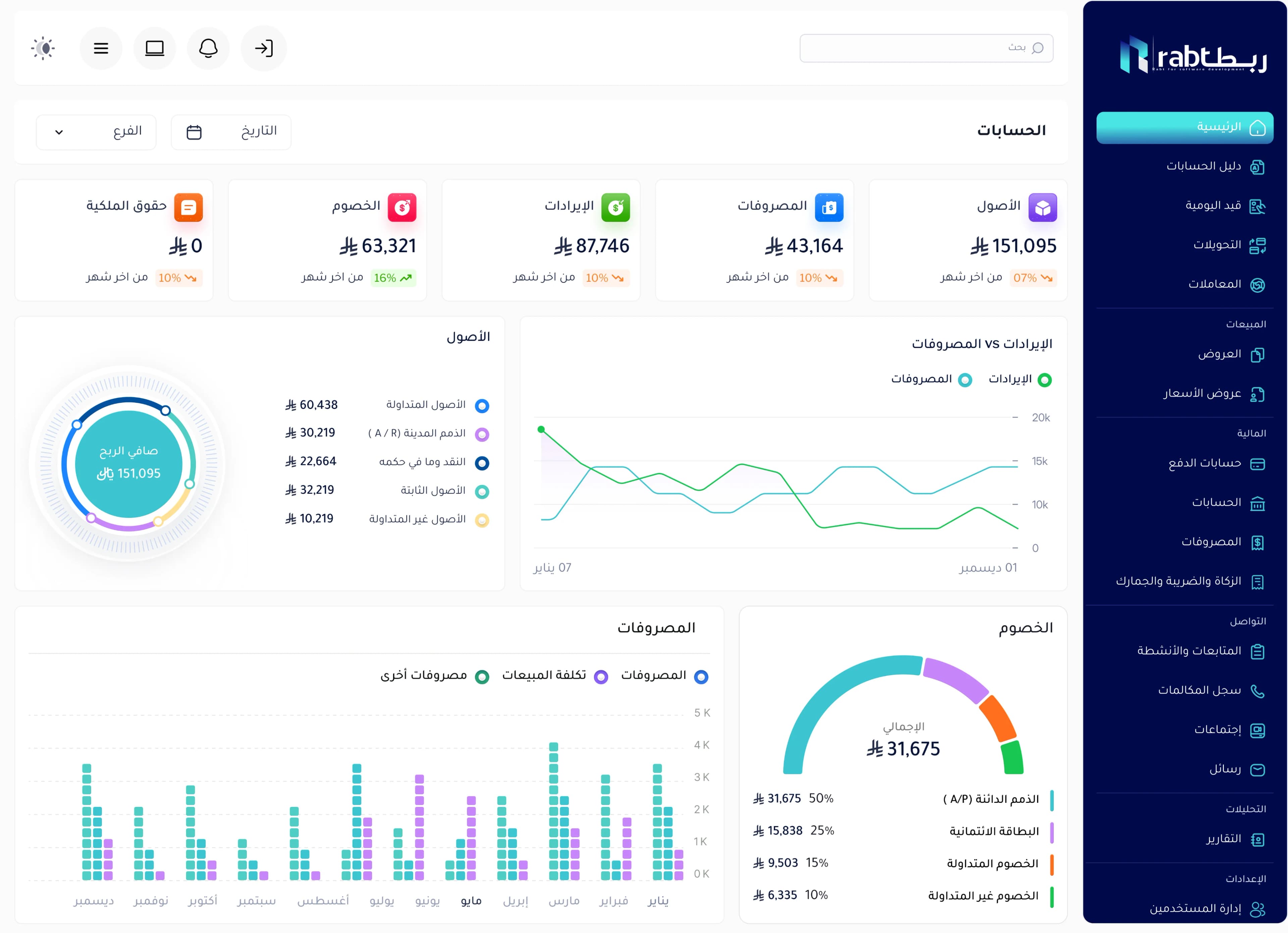
In Rabt by RSD, inventory is linked to sales and purchasing: every sale, purchase or transfer updates the balance instantly in every warehouse and branch. You track transfers between branches, give each storekeeper permissions on their own warehouse, and see balances and movement from a central dashboard without waiting for a count.
Frequently asked questions
How do I know each branch’s stock without a count?
Record every movement — sale, purchase, transfer, return, damage — in one system connected to sales and purchasing as it happens. Then the system balance is the real balance, and the count is only a check.
What is the best way to record branch transfers?
A two-step transfer document: sending deducts from the sending branch, and receiving adds to the receiving branch when confirmed. In between, the goods show as a pending transfer so nothing gets lost.
How often should I count inventory?
Rolling partial counts are best: a group of items each week or month based on value and movement, plus a full annual count. This surfaces discrepancies early without stopping work.
What is a reorder point?
The lowest quantity you accept for an item. When stock reaches it, the item shows in the shortage report so you order it before it runs out.